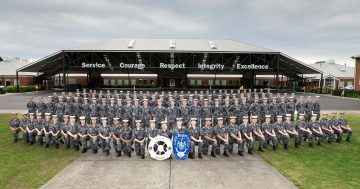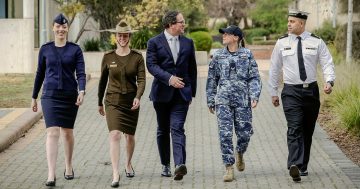

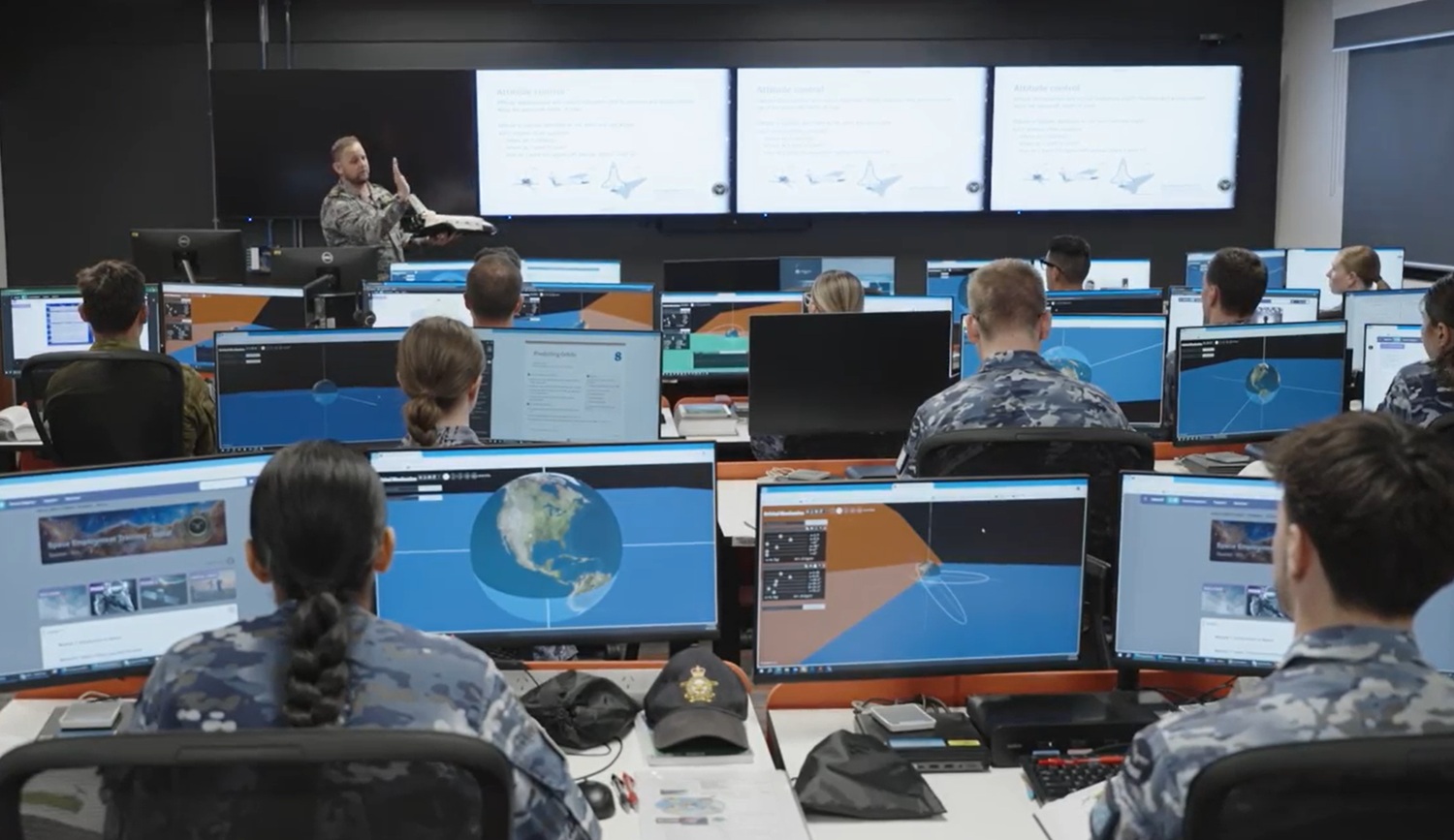
The space and cyber domains are considered as critical as the more traditional air, land, and sea sectors. Photos: ADF.
Minister for Defence Personnel Matt Keogh has announced that prospective personnel looking to join the Australian Defence Force (ADF) can now be directly recruited to space operations roles.
Previously, ADF candidates were required to join through more traditional ADF roles such as an engineer. The latest policy will allow recruits to apply for two new roles — Space Operations Officer and Space Operations Specialist.
Mr Keogh said the new roles would grow the ADF’s capabilities in space operations, which he described as a critical domain.
“This marks a significant step in building Australia’s sovereign space workforce,” he said.
“We now operate in a world of five domains, with space and cyber the new frontiers, as well as the more traditional air, land, and sea domains.
“These two domains are crucial to the success of the Australian Defence Force, and an inherent part of our everyday lives.
“Technological advances continue to accelerate and are changing the nature of our work — and the nature of defence itself.
“It’s why we commissioned the Defence Strategic Review when we came to government, to make sure the ADF has the capabilities it needs to defend our country.”
Mr Keogh said the space workforce would be employed across many space mission sets, including satellite communications; position, navigation and timing; space domain awareness (SDA); missile warning; satellite operations; space control; intelligence, surveillance, and reconnaissance (ISR); and environmental monitoring.
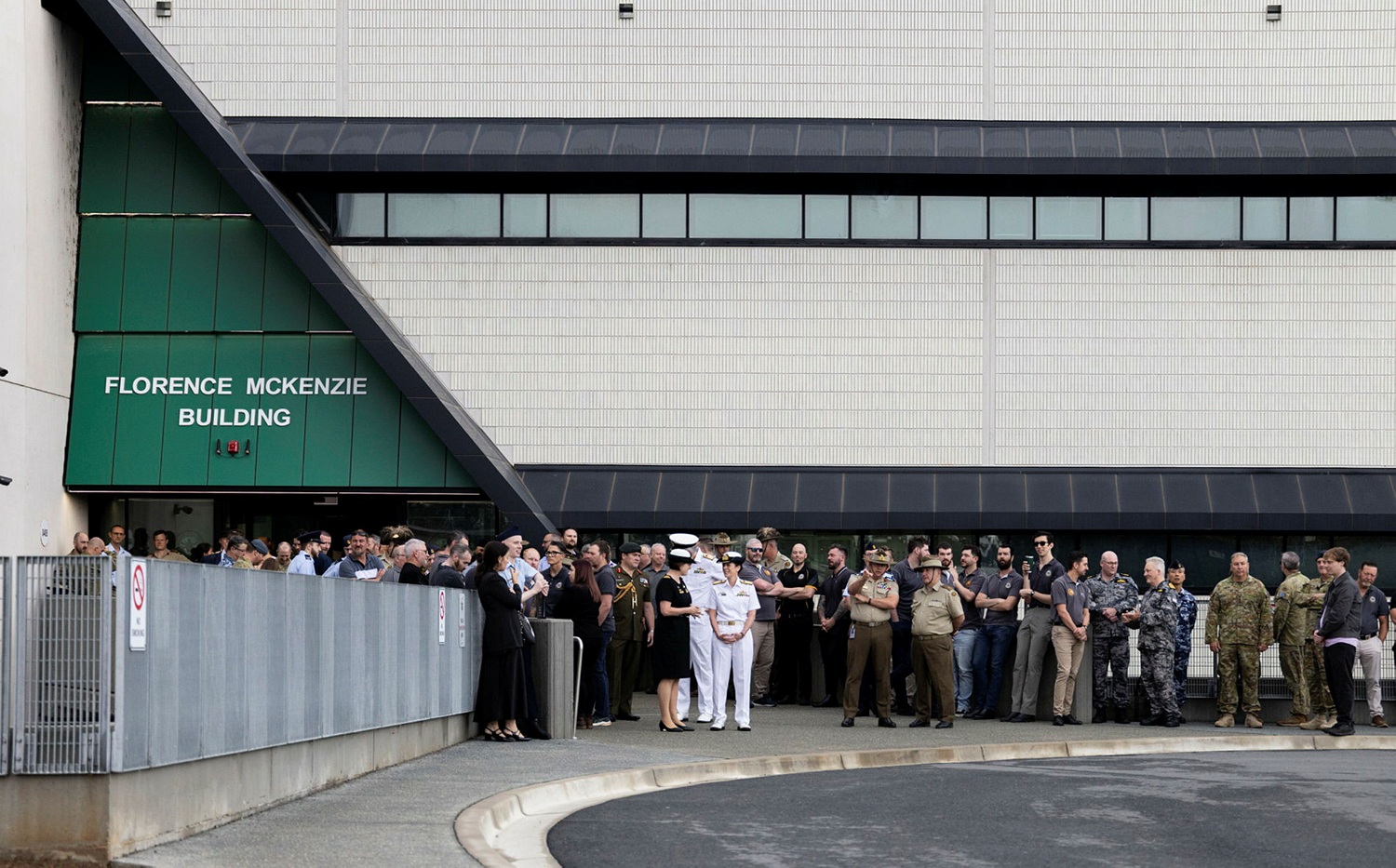
HMAS Harman’s former Building 488 has been renamed after pioneering female electrical engineer Florence McKenzie.
Many of these mission sets are conducted by all services within the ADF, while others fall under Space Command, which was reorganised under the Joint Capabilities Group (JCG) as part of the 2023 Defence Strategic Review (DSR).
“It’s a broad sweep of different things that our space operators do,” Mr Keogh told ABC News Breakfast.
“Previously, we’ve brought people from across Defence into our space operations. Now, people who’ve got an interest in space will be able to directly join our defence force to undertake these important roles.”
The announcement coincided with the reopening of a refurbished facility at Canberra’s HMAS Harman, where the base’s former Building 488 has been renamed as the Florence McKenzie Building after one of Australia’s first female electrical engineers.
“It is fitting that today we are officially unveiling a new name for the building that will house this important facility,” Mr Keogh said.
”A lifelong promoter of women’s technical education, [Florence McKenzie] founded the Women’s Emergency Signalling Corps on the eve of World War II.
“The Corps proved vital for the navy once war began, with its all-female instructors providing training to 12,000 Allied servicemen in Morse code and signalling, then emerging as critical skills in short supply.
“Australia’s first intake of 14 female naval recruits in 1941 all came from the Women’s Emergency Signalling Corps. Fittingly, they all worked here at HMAS Harman, a navy transmission and receiving station at the time.
“The purpose-built facility named in her honour provides a range of signals- and cyber-focused training and simulation courses for units across the ADF, including the army, Joint Operations Command and Joint Capabilities Group.
“I can’t think of better inspiration for the personnel who will be receiving their training here.”

The Defence School of Space and Cyber is based at HMAS Harman.