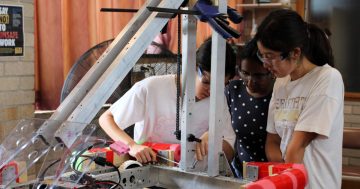


Leaders who explain the ‘’why’’, acknowledge uncertainty and communicate consistently create credibility and stability in their teams. Photo: Stock.
Dan Schawbel lists some of the measures employers can take to keep their workers happy and engaged in a world of uncertainty and constant change.
The workplace is entering a defining moment. After years of disruption — from the pandemic to economic uncertainty and rapid advances in artificial intelligence — employees are reassessing not just where they work, but why.
Workers now want flexibility without chaos, technology without dehumanisation, and careers that feel resilient in an unpredictable world.
At the same time, employers are under pressure to control costs, maintain productivity, and prepare for changes they cannot fully anticipate.
The organisations that thrive in the coming months will not be the ones chasing every new trend, but those that design workplaces intentionally.
It is no longer about perks or office aesthetics; it’s about creating environments where people can perform, grow, and stay engaged amid constant change.
This requires rethinking leadership, culture, technology, and trust, not as separate initiatives, but as interconnected systems.
The path forward is not about returning to what work used to be, nor about surrendering entirely to automation. It’s about balance.
The following strategies reflect what leading organisations are beginning to prioritise as they prepare for the next phase of work defined by adaptability, personalisation, and humanity.
Design for flexibility, not just location: Flexibility will be less about where people work and more about how work fits into their lives.
Organisations that focus only on remote or hybrid policies without rethinking how work is structured will fall short.
A better workplace recognises productivity does not happen on a single timeline and that different roles require different approaches.
When flexibility is embedded into job design, not treated as an exception, trust improves and burnout declines.
Shift from job titles to skills and capabilities: Roles are changing faster than titles can keep up, especially as AI reshapes tasks across functions.
The best workplaces in 2026 will focus less on static roles and more on dynamic skill sets, allowing organisations to redeploy talent more effectively, support internal mobility, and help employees build careers that evolve with the business.
For workers, it provides clarity on how to stay relevant even as job descriptions change. Skills-based thinking creates resilience on both sides.
Make AI a support system, not a threat: AI will soon be embedded in nearly every workflow, but how it is introduced will matter more than how powerful it is.
Employees do not resist AI because they dislike technology; they resist it when they don’t understand how it affects their roles or fear it will be used against them.
Better workplaces treat AI as a tool for augmentation, not replacement. They invest in AI literacy, transparency, and human oversight.
When employees understand how AI supports their work, rather than monitors or undermines it, adoption becomes through collaboration rather than compliance.
Personalise the employee experience: The era of one-size-fits-all work is ending. Employees differ by life stage, role, location, and personal priorities, and increasingly expect work to reflect that reality.
Better workplaces will personalise experiences wherever possible, prioritising learning opportunities and career paths. Personalisation turns work from something imposed into something co-created.
Rebuild trust through transparency: Trust has been strained by years of change, shifting policies, and uncertainty. Rebuilding it requires more than positive messaging, it needs clarity.
Employees want to understand how decisions are made, especially when those decisions affect pay, workload, or job security.
Leaders who explain the ‘’why’’ acknowledge uncertainty, and communicate consistently. In an unpredictable environment, honesty becomes one of the strongest forms of stability.
Redefine the role of managers: Managers are under more pressure than ever, expected to coach, support wellbeing, manage performance, and explain change. Yet many managers are still evaluated primarily on output rather than on their leadership skills.
A better workplace equips managers to succeed. That means reducing administrative burdens, clarifying expectations, and investing in leadership development focused on empathy, communication, and judgment.
Treat wellbeing as infrastructure, not a program: Wellbeing initiatives often fail because they are treated as add-ons rather than foundations.
Meditation apps and wellness challenges cannot compensate for unrealistic workloads, unclear priorities, or chronic stress.
Better workplaces address the causes of burnout by redesigning work itself. They ensure workloads are manageable, boundaries are respected, and recovery is possible.
When wellbeing is embedded into how work operates, not just how it’s discussed, it becomes sustainable.
Create more moments of human connection: As work becomes more digital and distributed, intentional connection matters more.
Informal interactions, shared rituals, and moments of recognition help maintain social bonds that technology alone cannot replace.
Better workplaces create opportunities for connection without forcing participation, recognising connection not as a ‘’nice to have’’, but as a core driver of collaboration and trust.
Invest in continuous learning, not one-time training: Static training has become obsolete. Skills can become outdated in months, not years.
A better workplace treats learning as continuing, practical, and embedded in work.
Instead of one-off courses, organisations provide access to real-time learning, experimentation, and skill-building aligned with actual business needs.
Continuous learning is no longer a benefit; it is a necessity for employability.
Measure what actually matters: What organisations choose to measure shapes behaviour. Better workplaces will move beyond narrow productivity metrics and look more holistically at engagement, sustainability, and outcomes.
This doesn’t mean abandoning performance — it means redefining it. Metrics that reflect employee experience, retention risk, and capability growth provide a clearer picture of long-term success.
When organisations measure what truly matters, they send a powerful signal about their priorities and values.
In a world where employees have more choices and higher expectations, better workplaces will not happen by accident. They will be built deliberately — one decision, one system, and one human-centred choice at a time.
Dan Schawbel is a bestselling author and managing partner of Workplace Intelligence, a research and advisory firm helping HR adapt to trends, drive performance and prepare for the future. This article is part of his Workplace Intelligence Weekly series.