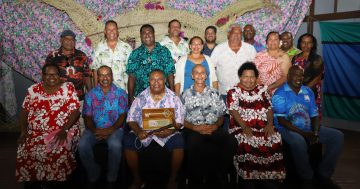

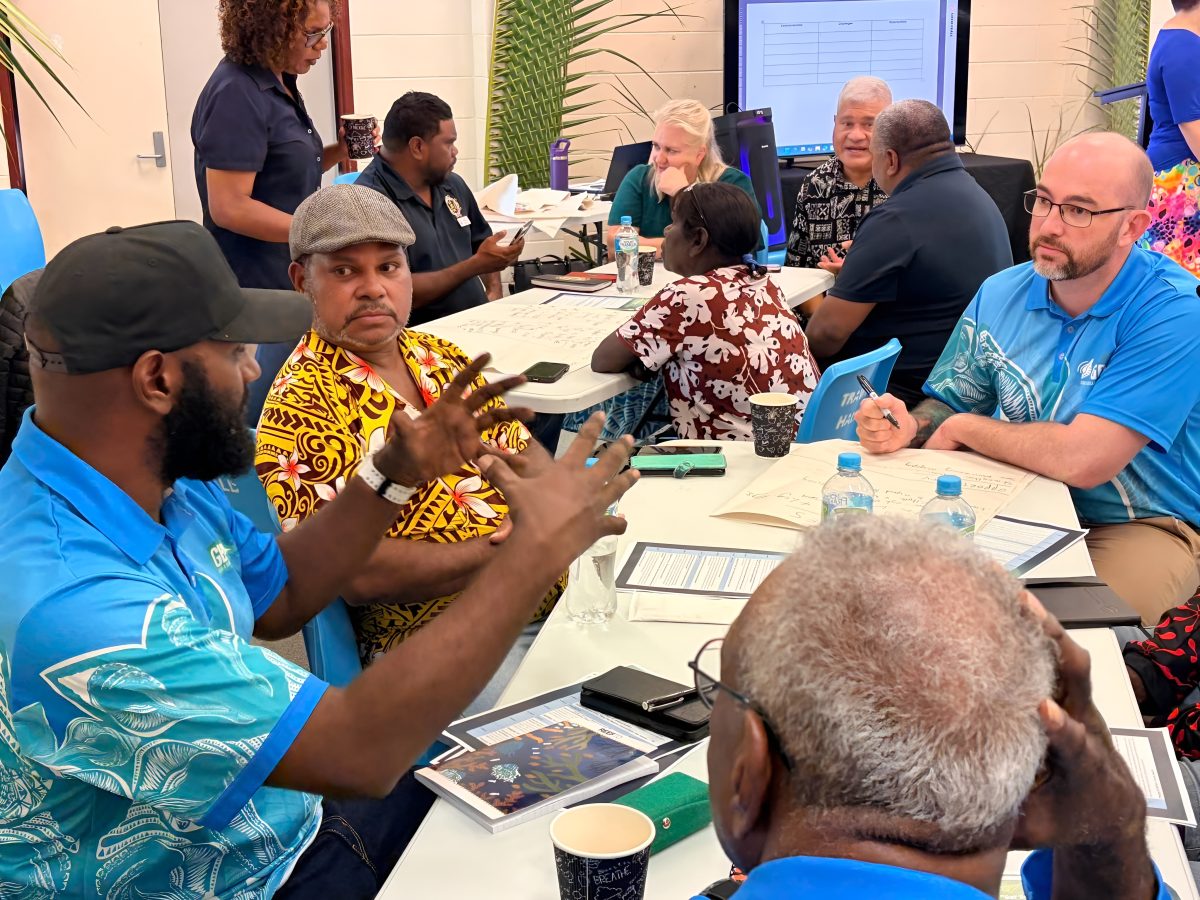
Torres Strait leaders call for sea rights to be better recognised and embedded in legislation. Photo: Gur A Baradharaw Kod.
Torres Strait leaders have called for stronger recognition of Sea Country rights as a recent surge in illegal fishing activities on local waters “exposed what has been a problem for a long time”.
Traditional Owners and members of Gur A Baradharaw Kod Sea and Land Council (GBK) gathered on Thursday Island last month in conjunction with the 90th Torres Strait Islander Maritime Strike anniversary.
The gathering set out seven principles focused on work to protect, manage and assert rights and responsibilities over Sea Country, calling for rights to be fully protected, not just in theory, but in practice.
GBK chair Ned David said while the Torres Strait region had seen recent success in Native Title determinations, the laws of sea rights were not well recognised and embedded.
“We’ve had so many illegal activities in our region, which is an incredible breach of the articles of the treaty, and that’s been going on for years,” he said.
“Our rights and interests should be primary, but we’re prevented from enjoying those rights because of the non-policing of some of these rules.
“We need to shine a light on some of these things. Funny enough, that forum happened during the 90-year strike event, not knowing that while we were celebrating, there was someone cruising in our waters illegally.”
In Akiba v Commonwealth [2013 HCA 33], the High Court of Australia unanimously ruled Commonwealth and Queensland laws regulating commercial fishing did not extinguish the native title rights of Torres Strait Islander communities to take fish and other marine resources for commercial purposes.
The court found such regulations merely placed a limitation on the exercise of the right, not its existence – affirming that Torres Strait Islander peoples retain the right to take resources for any purpose, including trade.
Building on this legal foundation, GBK called for a national campaign to ensure those rights were recognised, respected, and embedded in legislation.
The seven principles:
- Recognition of ancestral custodianship
- Sea rights are human rights
- Self-determination in sea governance
- Caring for Sea Country as cultural obligation
- Intergenerational knowledge and youth empowerment
- Stronger alliances and shared voice
- Truth-telling and historical justice.
Original Article published by Chisa Hasegawa on Cape York Weekly.