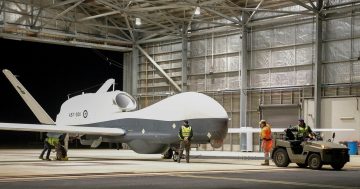

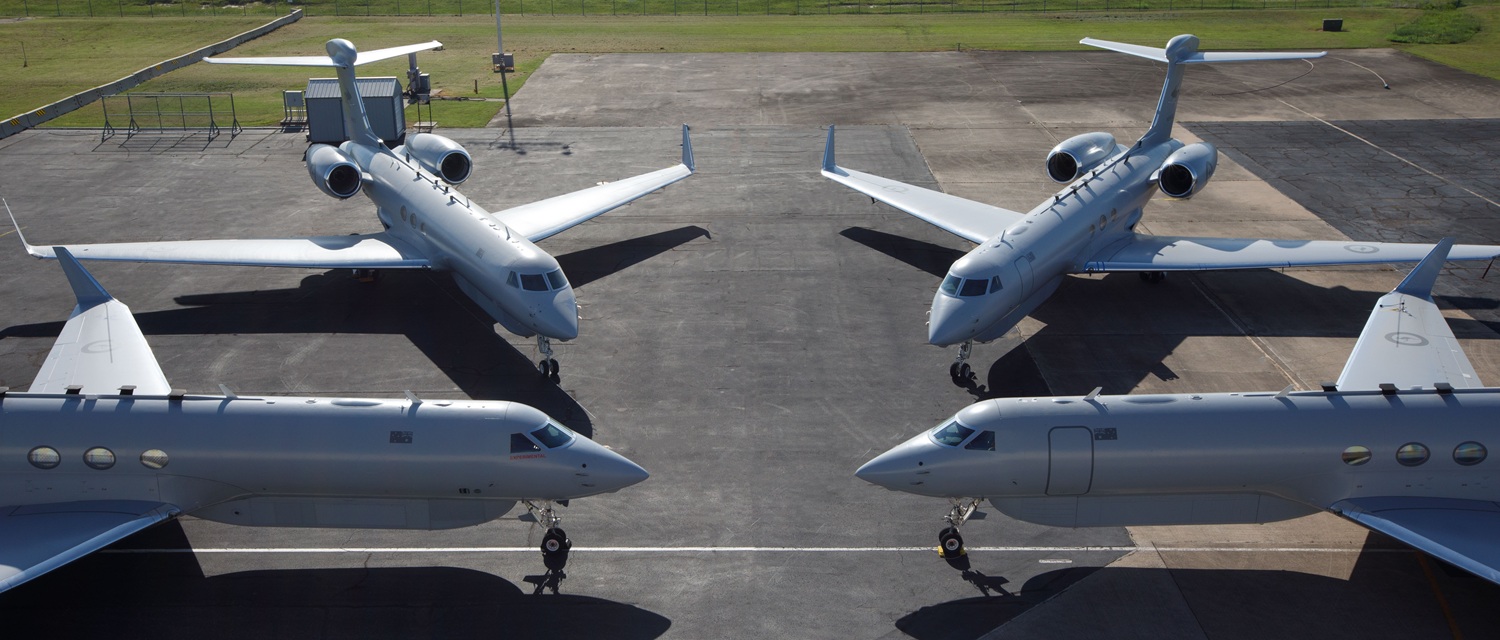
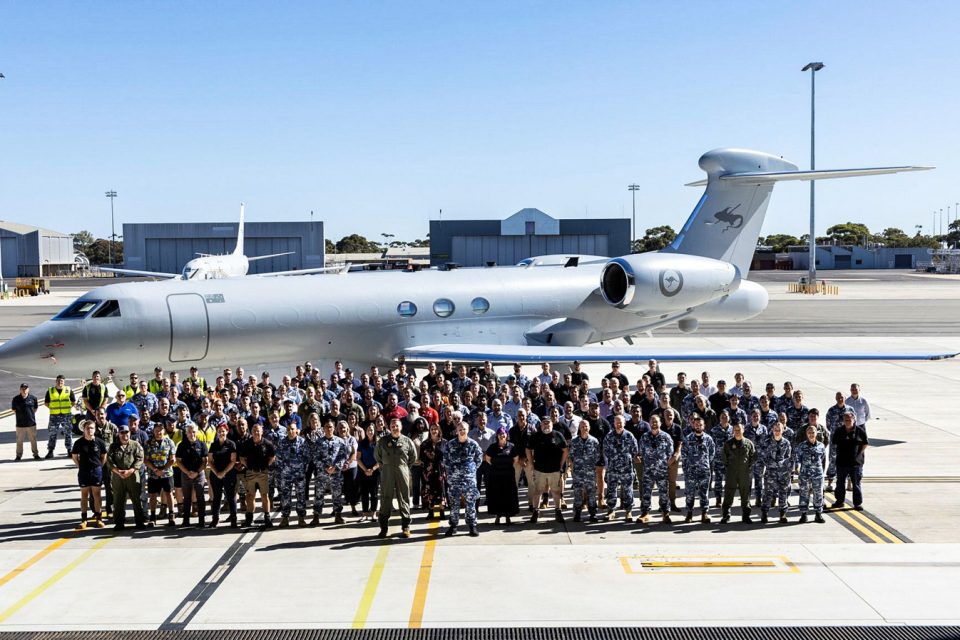
All four of the RAAF’s MC-55As on L3Harris’ flightline at Greenville in Texas. Photo: L3Harris.
The first of four MC-55A Peregrine Intelligence, Surveillance, Reconnaissance and Electronic Warfare (ISREW) aircraft has been delivered to RAAF Base Edinburgh in Adelaide.
The aircraft – a heavily modified Gulfstream G550 corporate jet – arrived in Australia on 21 January after a trans-Pacific delivery flight from Texas via Hawaii and Guam.
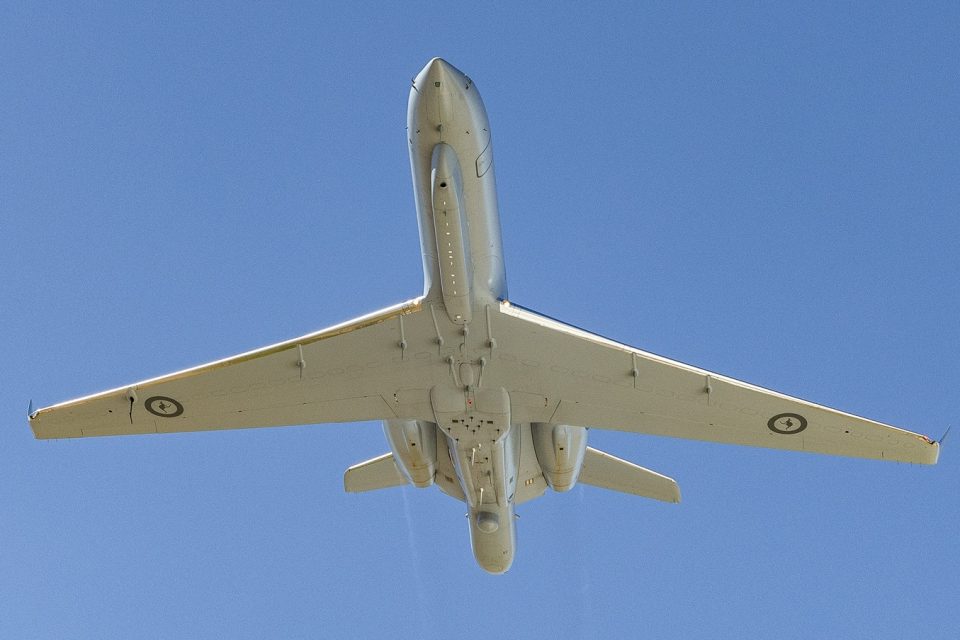
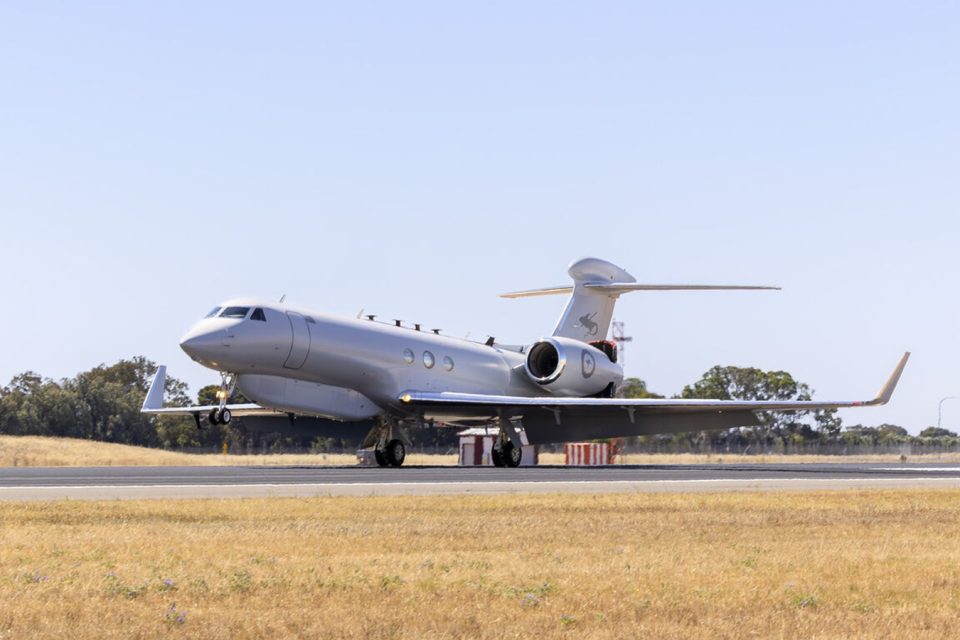
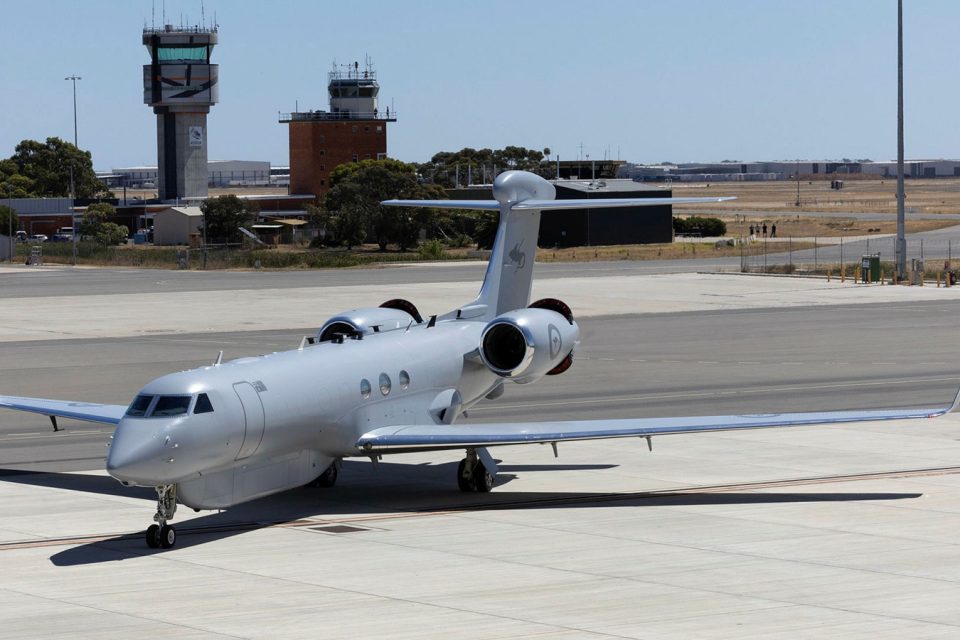
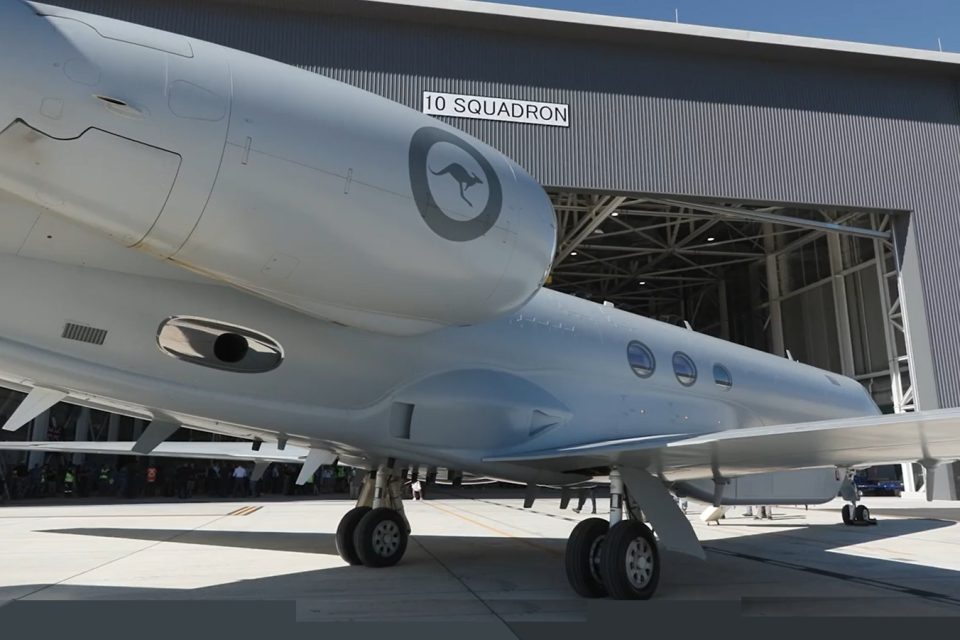
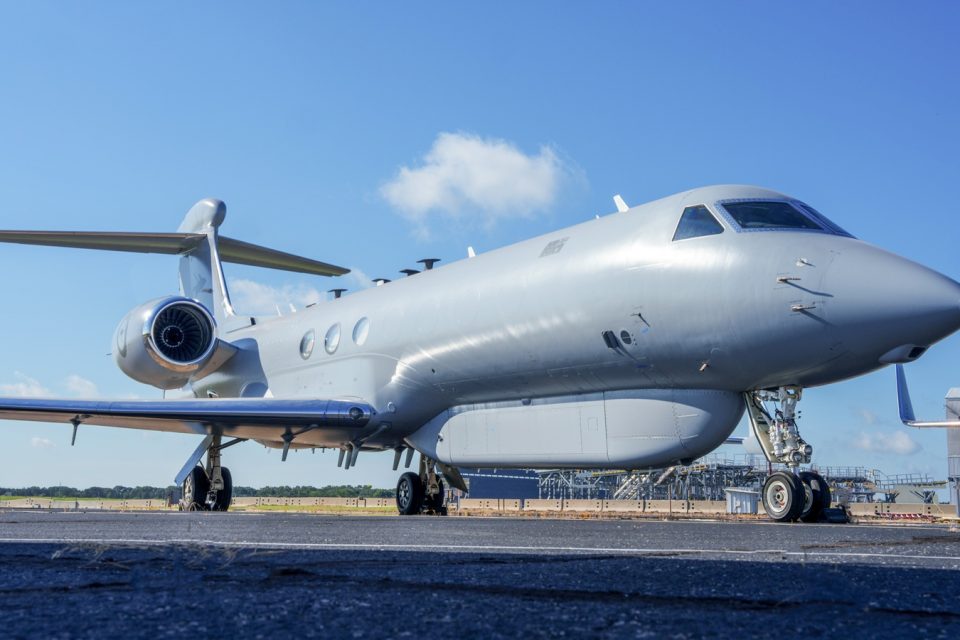
The G550 is a popular host airframe for such modifications, with several countries operating EW, airborne early warning and control (AEW&C), training, range management, and VIP passenger configured models. The MC-55A features several distended bulges and apertures including a long ‘canoe’ fairing under the forward fuselage, and numerous other small antennae all around the airframe.
Rather than being handed over to the Royal Australian Air Force, the aircraft still wears its US civil test registration N584GA, and the US Air Force will retain ownership and have crews aboard for initial training. When they enter service, the four MC-55As will be operated by the RAAF’s Number 10 Squadron which previously operated a small number of AP-3C Orions aircraft modified for a similar ISREW role.
The MC-55A will fulfil a passive high-altitude, long-range electronic intelligence role, gathering data on adversary land-based, naval and airborne radar systems and communications. This data can be transmitted in real-time, and can be compiled into a data library for Australian and allied combat aircraft so they can better identify, classify, and possibly disrupt these systems if deemed a threat.
It will complement those ISR systems already operated aboard the RAAF’s new Northrop Grumman MQ-4C Triton uncrewed aircraft based at Tindal in the NT, and the Boeing P-8A maritime response aircraft also based at Edinburgh.
The MC-55A has been a long time coming for Australia, with the requirement first being articulated in the 2016 Defence White Paper (DWP) and supporting Integrated Investment Plan (IIP) under Defence’s Project AIR 555 Phase 1.
In June 2017 the US Defense Security Cooperation Agency (DSCA) advised Congress that the US State Department had approved a sale of up to five “Gulfstream G550 aircraft modified to integrate Airborne Intelligence, Surveillance, Reconnaissance, and Electronic Warfare (AISREW) mission systems”, for an estimated US$1.3bn (A$2bn).
The next public information appeared in July 2018 when the Pentagon awarded then L3 Technologies (now L3Harris) an initial contract for the upgrade of the first two G550s for the RAAF.
In March 2019, then defence minister Christopher Pyne and then minister for defence industry Senator Linda Reynolds formally announced that four MC-55As would be acquired for A$2.46bn.
The four unmodified ‘green’ aircraft had all been manufactured by the end of 2019, before being delivered to L3Harris in Greenville in Texas to be modified for their ISREW role.
The contract for the modification work is managed through the US Air Force’s 645th Aeronautical Systems Group – also known as ‘Big Safari’ – which manages most of the advanced EW capabilities operated by the US including the RC-135 Rivet Joint series, and the new EA-37B Compass Call II.
In a statement, Chief of Air Force Air Marshal Stephen Chappell said, “The introduction of the MC-55A to Air Force’s fleet will ensure we have a critical enabler for advanced ADF capabilities and, as identified in the 2024 Integrated Investment Program, provide important intelligence information to support ADF missions.
“The MC-55A Peregrine is more than an aircraft — it is a strategic capability that reinforces our ability to protect national interests in an increasingly complex security environment.”
Squadron Leader Damian Ross, temporary Commanding Officer 10 Squadron added, “The arrival of the MC-55A Peregrine is a major milestone for our squadron. Its advanced systems will deliver real-time threat warning and actionable intelligence to support decision-making.”
Defence Minister Richard Marles said the introduction of the MC-55A was a significant step forward in strengthening Australia’s ability to monitor and protect its strategic interests, including key maritime approaches.
“This capability will integrate seamlessly with allied and partner systems, enabling the Air Force and ADF to share intelligence with security partners like the United Kingdom and United States – reinforcing our collective security and enhancing regional stability,” he said.