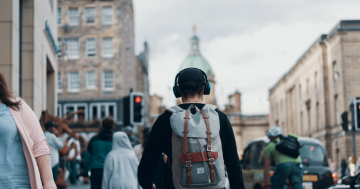


Watching television and streaming are the two most popular free-time activities for busy Aussies. Photo: File.
Australians are feeling “time poor” and constantly under pressure, with television and streaming services their most popular escapes for free-time activity.
At least that’s how it was a year ago and nothing much appears to have changed.
The Australian Bureau of Statistics’ latest Time Use Survey has just been released, providing a snapshot into how Aussies use their time and how they feel about it.
Respondents were surveyed late in 2024, with the data released on Wednesday (17 December).
The information is used by governments across jurisdictions to inform policy about family support, gender equality, workplaces and the value of unpaid work and looking after children.
There are a number of top take-home insights from the survey.
Watching TV or streaming was the most reported free time activity, with 62 per cent of people switching on for an average of two hours and 55 minutes a day.
Almost a quarter of young people aged 15-24 (23 per cent) reported playing video or mobile games.
Young male gamers spent an average of three hours and 56 minutes gaming, while females spent two hours and 25 minutes.
But Australians are feeling time pressures, with more than a third of females (36 per cent) and 30 per cent of males reporting they always or often feel rushed for time.
People who work from home spend an hour longer doing unpaid work during their workday.
On average, those who worked from home spent three hours and 24 minutes doing unpaid work, compared with two hours and 26 minutes for those who worked outside the home.
“On workdays, those who worked from home spent less time on paid work,” the report states
“People who worked from home worked for seven hours eight minutes. People who did not work from home worked for eight hours 18 minutes.”
Employment activities include paid work and travel to and from work, with the data showing more males participated in employment activities on their “diary day” (or personal planning day) than females (48 per cent compared with 38 per cent).
On average, males doing employment activities spent almost an hour more in a day doing so than females (eight hours 55 minutes compared with seven hours 58 minutes).
On the days that females worked from home, they did more unpaid work than males who worked from home, with women spending an average of three hours 48 minutes doing unpaid work on the days they worked from home
Men spent an average of three hours one minute doing unpaid work on the days they worked from home.
Those who worked from home also spent more time on free-time activities.
“Females who worked from home spent three hours 35 minutes on free-time activities compared with three hours 10 minutes for those who did paid work but did not work from home,” the report states.
“Similarly, males who worked from home spent four hours on free-time activities compared with three hours 24 minutes for those who did paid work but did not work from home.”
Women continued to spend more time on unpaid work, averaging four hours and 53 minutes a day, while men spent three hours and 52 minutes.
Unpaid work includes domestic duties like housework, food and drink preparation and shopping, as well as looking after children, other adults and volunteering.
Mothers spend more time looking after children (four hours 38 minutes) than do fathers (three hours 29 minutes), which includes things such as providing personal care like feeding, bathing or changing, playing or helping with homework.
Just under one quarter (23 per cent) of people supervised a child while doing another activity such as cooking, gardening, or watching TV, for an average of seven hours eight minutes a day.
When doing paid work, nine per cent of people were also supervising a child, for an average of five hours 41 minutes a day.
Original Article published by Chris Johnson on Region Canberra.